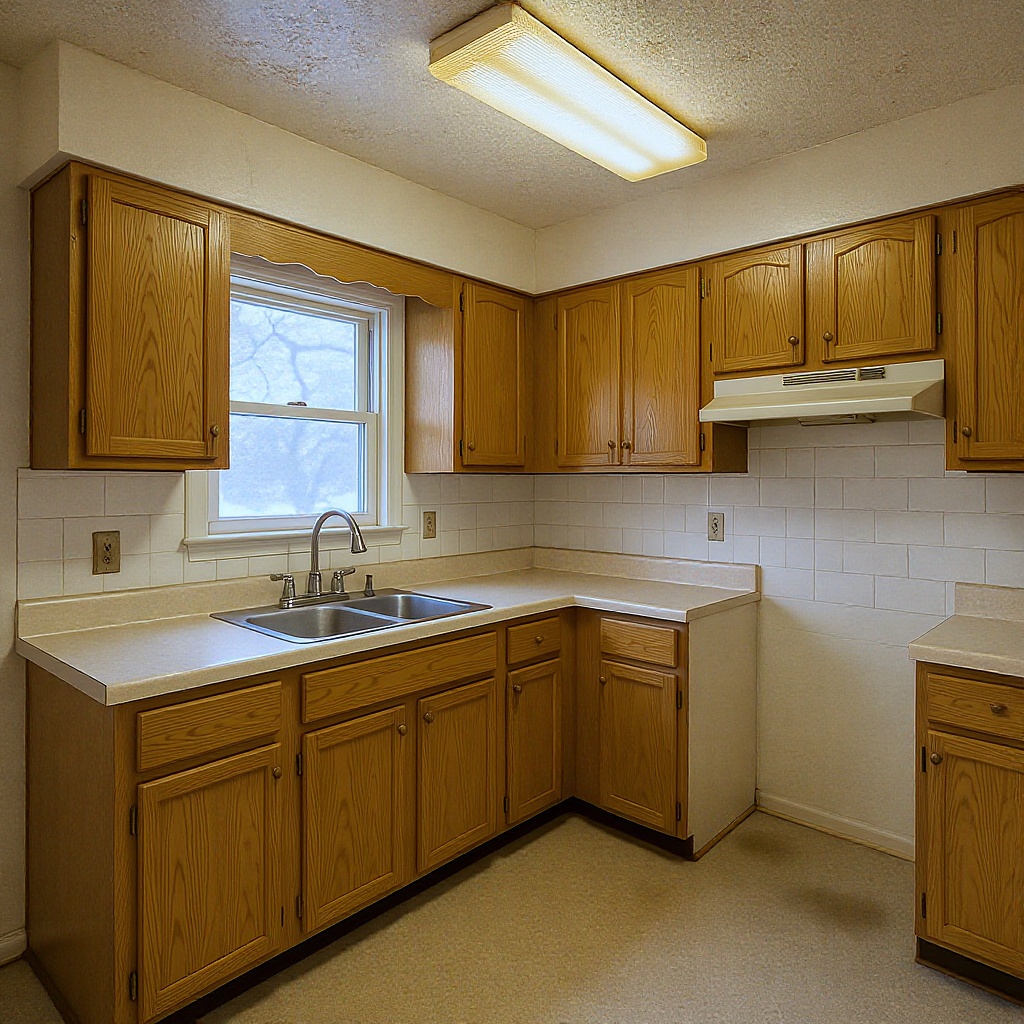
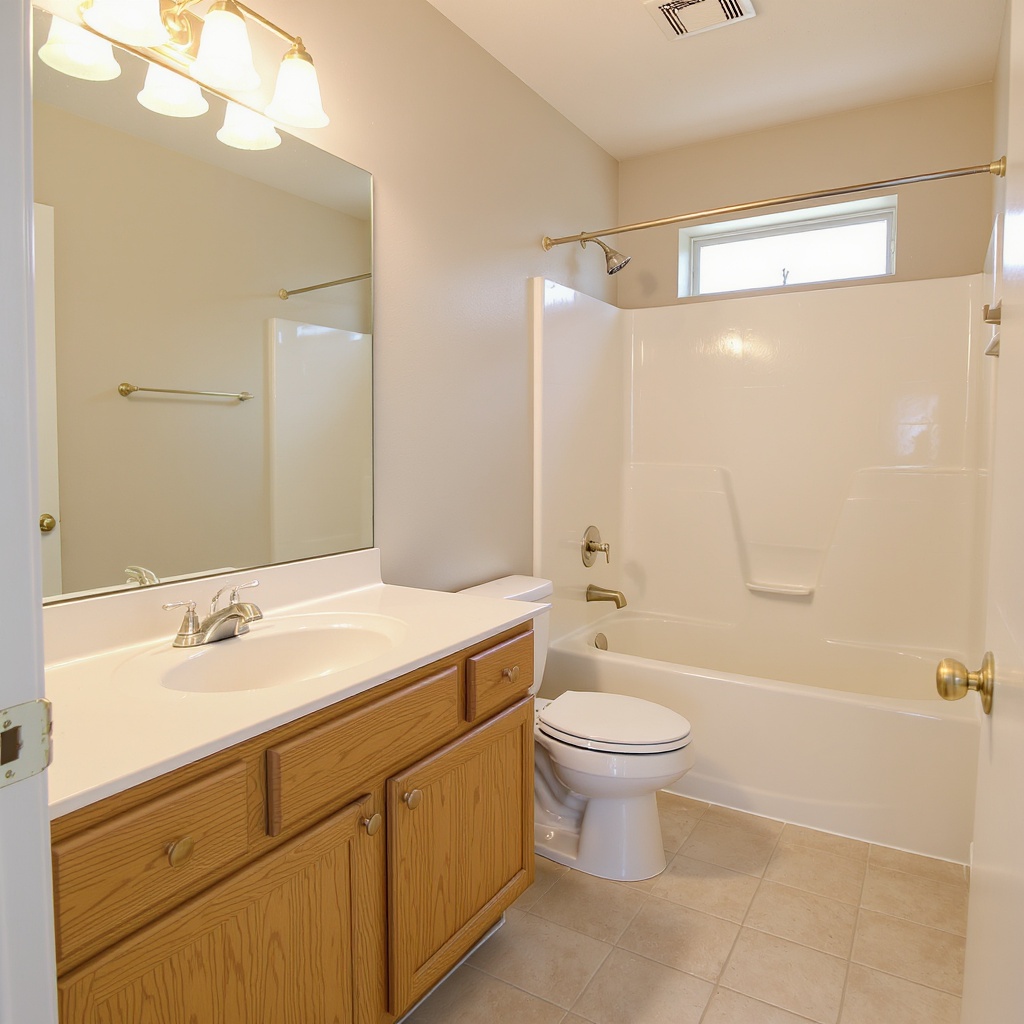
Living Room — Sample Property
Installer-Ready Specification Board · Confidential
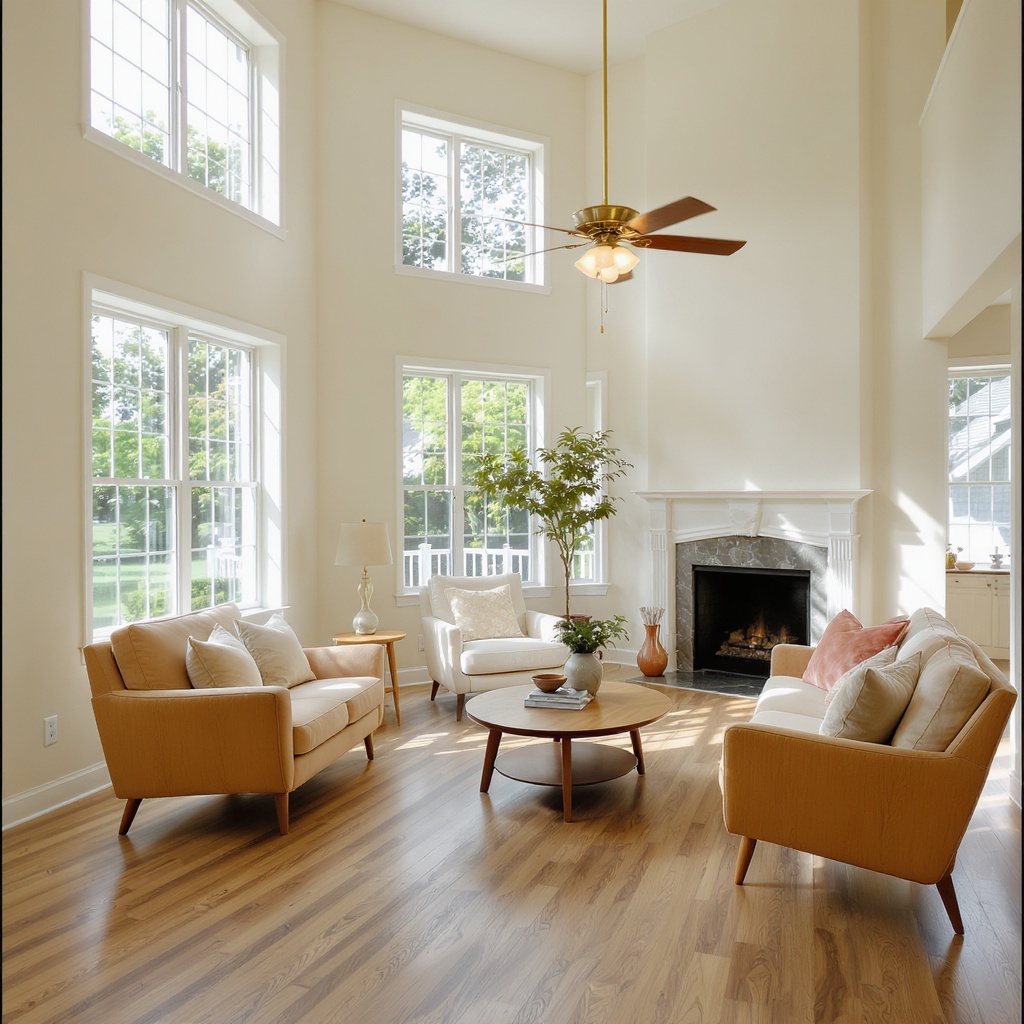
Subject room · Vee identified upgrade opportunity in ceiling fixture, wall treatment, and floor finish — three targeted interventions to shift perceived price point before listing.
Vee's Design Read
The room has everything a designer works around: correct proportions, genuine natural light from a well-positioned window, and furniture with honest silhouettes that don't fight each other. What's pulling it down is the finish hierarchy — or more precisely, the absence of one. The ceiling fixture reads as an afterthought, the wall color is neutral in the way that signals indecision rather than restraint, and the flooring establishes the lowest note in a composition that could otherwise climb considerably higher. The architecture is asking for a warmer envelope and a lighting story that acknowledges ceiling height. Given the west-facing light, a warm white treatment will photograph at a different latitude entirely than what's here now. The interventions are surgical — none require structural work — and the cumulative effect will be a room that holds its own against listings priced substantially above this one.
Style Direction
Coastal California Modern — warm whites, natural materials, restrained brass
Specification Board
Five-Category Finish Specification
Each category includes Vee's reasoning, a specific product callout, and a tier indicator. Price tiers: ●○○ budget · ●●○ premium · ●●● luxury.
01
Wall Treatment
The existing texture is serviceable but the sheen level is absorbing light at the wrong angle for a west-facing room. A plaster-finish or matte treatment with a warm-white base will add perceived depth and photograph cleanly under both natural and artificial light.
●○○
Budget
Benjamin Moore Aura Interior, flat finish — custom-tinted to BM White Dove OC-17
2 coats over primed surface · 350–400 sq ft per gallon
~$68/gal · Sherwin-Williams Emerald or equal acceptable substitute
●●○
Premium
Portola Paints Roman Clay® wall finish, Whitewash colorway
2-coat application, Venetian trowel technique · Approx 80 sq ft/quart
~$85/qt · Professional application strongly recommended
●●●
Luxury
San Marco Marmorino KS natural lime plaster, bianco colorway, burnished finish
3-coat system, full-wall application only · Requires professional plasterer
~$320–480 installed/100 sq ft · Lead time: 2 weeks for specialist tradesperson
02
Flooring
The laminate undercuts every other finish in the room. A wide-plank, low-sheen product in a warm oak tone will anchor the composition, read larger on camera, and establish the finish hierarchy that pulls the rest of the spec together.
●○○
Budget
LifeProof Tahoe Oak LVP, 7mm, 12-mil wear layer — warm honey oak, wire-brushed texture
Floating install · Acclimate 48h · Compatible with radiant heat
~$2.98/sq ft · Home Depot · No glue; float over existing subfloor if level within ⅛"
●●○
Premium
Shaw Floorté Couture 7" wide-plank, Brushed Oak, 20-mil wear layer
Glue-down or float · Wire-brushed texture hides minor subfloor imperfection better than smooth
~$5.40/sq ft · Shaw Floors direct or authorized dealer
●●●
Luxury
Carlisle Wide Plank 5" White Oak, Character Grade, custom matte finish, no stain
Nail-down over plywood subfloor · Moisture barrier required on slab · 6–8 week lead time
~$14–18/sq ft installed · Carlisle priced on quote
03
Lighting
The builder-grade ceiling flush mount is flattening the ceiling height and reading as temporary. A statement fixture centered on the conversation area — not the room center — will add the vertical pull this room needs and shift the entire atmosphere after dark.
●○○
Budget
Kira Home Essex 3-Light Semi-Flush, brushed nickel, 17" diameter
Mounts to standard ½" knockout · No additional wiring required · Swap ceiling medallion for finish
~$85 · Amazon · Ships 2 days · Model: K25-0012
●●○
Premium
Hinkley Lark 4-Light Pendant, Lacquered Brass, 22" diameter
Requires junction box rated 50 lb minimum · Center on seating area, not room center · Add dimmer
~$380 · Hinkley · #42307LCB
●●●
Luxury
Visual Comfort Fresno Large Lantern, Gilded Iron finish, 26" diameter
Install at 84" AFF in rooms with 9'+ ceilings · Dedicated 15A circuit if adding dimmer · Chain adjustable
~$1,100 · Visual Comfort · CHC5537GI
04
Hardware
Cabinet and door hardware is the jewelry of a room — disproportionately noticed in listing photos. The existing satin nickel pulls are serviceable but date the space. A warm-metal replacement at any tier will read as a deliberate design choice and align with the brass/warm white direction in the lighting spec.
●○○
Budget
Amerock Blackrock 3¾" bar pull, champagne bronze, solid zinc, 96mm CTC
96mm bore · Matches standard cabinet bore pattern — no template required
~$4 ea · Home Depot · BP36877BBZ · Order 20% excess for breakage
●●○
Premium
Atlas Homewares A-Line 5" pull, brushed brass, solid brass core, 128mm CTC
128mm bore · Inspect for finish consistency batch-to-batch — order from same lot
~$14 ea · Atlas · A605-BRB
●●●
Luxury
Waterworks Studio Ribbon 4" pull, unlacquered brass, solid forged, 96mm CTC
Living finish — will patina naturally · Seal with Renaissance Wax 2×/yr to stabilize tone if preferred
Priced on quote · Waterworks Studio
05
Paint
If only one intervention happens, it's paint — highest ROI per dollar of any finish category. The existing beige is absorbing light and reading muddy on camera. A clean warm white — walls, trim, and ceiling in the same color — will make the room read two feet wider and reflect the west light back into the space.
●○○
Budget
Behr Marquee Interior, Eggshell — Pale Wheat N310-1 walls · Snowbound (SW 7004) trim in semi-gloss
2 coats on properly primed surface · Walls and trim differ — do not combine
~$38–44/gal · Home Depot · Minimal prep required over existing painted surface
●●○
Premium
Benjamin Moore Aura Interior, Eggshell — White Dove OC-17 walls, trim, and ceiling throughout
Same color on all surfaces creates a clean envelope · Photographs as white on camera · 2 coats
~$65/gal · Benjamin Moore dealer
●●●
Luxury
Farrow & Ball Wimborne White No. 239, Estate Eggshell — full room including ceiling
High-pigment formula reads warm at morning, cool at dusk · Use F&B Primer Undercoat for full depth
~$115/gal · Farrow & Ball direct or stockist
Installer Notes
Sequencing
Install flooring before painting. Allow flooring to acclimate 48h before install; complete all subfloor prep (flatten to ⅛" over 8') before delivery. Paint follows flooring. Hardware swap is last — no risk of paint overspray on new pulls.
Flooring
Existing baseboard to remain. New flooring terminates under existing trim; install ¼-round shoe moulding at wall transition if gap exceeds 3/16". Do not nail through LVP into subfloor — floating installation only for budget and premium tiers.
Lighting
Verify junction box load rating before any pendant installation. Budget fixture is direct swap — confirm wire gauge matches fixture rating (14 AWG for 15A circuit). Premium and luxury fixtures: confirm ceiling outlet box rated for fan/pendant (50 lb minimum); if not, replace box before fixture arrives.
Wall Treatment
Plaster and lime-finish products (premium and luxury tiers) require full wall application — spot patching will show. Tape windows and trim carefully; plaster products are not water-cleanup. Budget paint tier: light sand between coats; do not over-roll or texture will telegraph through finish.
Hardware
Confirm existing bore pattern (96mm vs 128mm) before ordering. Most modern cabinetry uses 96mm CTC — measure before purchasing premium tier (128mm). Fill old holes with wood filler if bore pattern changes; sand flush and spot-prime before painting cabinet faces.
Photography
Schedule photography no sooner than 72h after final paint coat to allow off-gassing. All new fixtures should have bulbs installed and tested before photographer arrives — include warm-white LED (2700K) throughout for consistent color temperature in listing photos.